
Co-Creating with AI: How Human Strategists and Generative Models Build Better Campaigns
AI and human co-creation in a long-form format, with plenty of bullet points and simple language. It is based on recent research showing that human-AI creativity works best when people act as co-creators, not just editors, and when the collaboration is designed to support originality, confidence, and feedback loops.
AI and Human Co-Creation
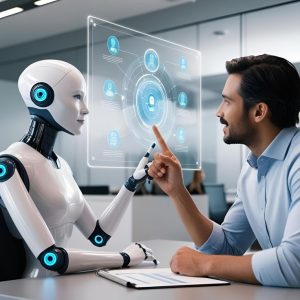
AI and human co-creation means people and artificial intelligence work together to produce something new, useful, or meaningful. It is not just about using AI as a machine that “does the work”; it is about building ideas together, refining them, and shaping the final result as a team. In creative tasks, research suggests that the relationship matters a lot: people tend to benefit more when they actively co-create with AI rather than simply edit AI-generated output.
Think of it like this: AI can be a fast idea generator, but the human gives direction, taste, judgment, emotion, and real-world context. When both sides contribute well, the result can be faster, richer, and more innovative than either could produce alone. This is why AI and human co-creation is becoming important in business, education, design, writing, marketing, research, and even product development.

What co-creation means
Co-creation is more than “asking AI for help.” It is a back-and-forth process where the human and AI shape the outcome together. In good co-creation, the human is not passive, and the AI is not just a calculator; both play active roles.
-
The human brings goals, values, and final judgment.
-
The AI brings speed, pattern recognition, and many possible ideas.
-
The collaboration becomes stronger when there is iteration, feedback, and adjustment.
-
Good co-creation keeps the human in control of meaning and quality.
-
The best results often come from a process of drafting, testing, revising, and improving.
This matters because creativity is often not a single “aha” moment. It usually grows through exploration. AI can widen the range of options, while the human can choose what fits the purpose, audience, and emotion behind the work.
Why it matters now
AI tools are now available to ordinary users, not just engineers or large companies. That means co-creation is becoming part of daily work, from writing emails to designing ads, from planning lessons to creating visual content. For business owners, this is especially useful because it can save time, reduce effort, and improve the quality of output without needing a large team.
Recent studies also show that AI can increase both novelty and usefulness in collaborative work, especially when the setup encourages genuine cooperation instead of one-way editing. This suggests that the value of AI is not only in automation, but in helping people think differently and build better ideas.
How the process works
Human-AI co-creation usually follows a cycle, even when it feels informal. The human starts with a goal, the AI generates possibilities, the human reviews them, and then both move through several rounds of improvement.
-
Step 1: Define the goal clearly.
-
Step 2: Ask the AI for ideas, options, or first drafts.
-
Step 3: Review what the AI produced.
-
Step 4: Add human judgment, taste, and real context.
-
Step 5: Refine the output through repeated feedback.
-
Step 6: Finalize the result with human approval.
This workflow works best when the human does not treat AI as a black box. Instead, the human should guide it with clear prompts, ask follow-up questions, and correct weak areas. That way, the collaboration becomes active instead of mechanical.
Where it is used
AI and human co-creation is already used in many fields, and it is growing fast because the benefits are practical as well as creative.
-
Writing and content creation.
-
Graphic design and visual storytelling.
-
Marketing and advertising campaigns.
-
Product development and prototyping.
-
Research and knowledge discovery.
-
Education and lesson design.
-
Music, art, and multimedia production.
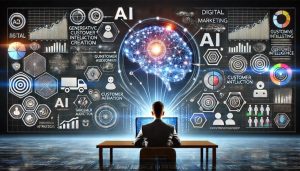
In business, this can mean using AI to brainstorm names, write draft copy, summarize customer feedback, or create different versions of a campaign. In each case, the human decides what fits the brand, audience, and long-term strategy. That human layer is what turns raw AI output into something valuable.
Benefits of co-creation
The biggest advantage of human-AI co-creation is that it combines the strengths of both sides. AI is fast, tireless, and broad in its suggestions, while humans are thoughtful, emotional, ethical, and context-aware. That combination can improve both productivity and creativity.
-
Faster idea generation.
-
More creative variations.
-
Better brainstorming support.
-
Reduced time spent on first drafts.
-
Stronger productivity for small teams.
-
More experimentation with less risk.
-
Support for people who lack confidence or experience in a skill.
Another important benefit is confidence. Research shows that creative self-efficacy—the belief that “I can create something good”—improves when people are treated as co-creators rather than mere editors. This means AI can actually help people feel more capable, not less, when it is used in a supportive way.
Human strengths
Even though AI can generate impressive output, it still depends on human guidance for meaning, purpose, and final quality. Humans bring qualities that AI does not truly possess, such as lived experience, ethical judgment, empathy, cultural understanding, and the ability to sense nuance.
-
Humans understand emotions and social context.
-
Humans know what matters for a specific audience.
-
Humans can judge whether something feels authentic.
-
Humans are responsible for ethics and fairness.
-
Humans can notice when an idea is technically good but practically wrong.
-
Humans can connect the work to strategy, brand, or mission.
This is why human-AI co-creation should not be seen as replacing people. It is better understood as extending human capability. The machine can help expand possibilities, but the human decides what is meaningful.
AI strengths
AI brings different strengths that make collaboration powerful. It can process large amounts of information quickly, find patterns, generate many alternatives, and help overcome creative blocks. It is especially useful when the human needs to move quickly from vague ideas to a workable draft.
-
It can create many options in seconds.
-
It can suggest combinations a human might overlook.
-
It can help with repetitive or time-consuming tasks.
-
It can support rapid iteration.
-
It can offer fresh angles for brainstorming.
-
It can work continuously without fatigue.
Still, AI does not “understand” in the human sense. It predicts and generates based on patterns. That is why the final quality depends heavily on the human’s direction, editing, and judgment.
Common risks
Co-creation is useful, but it is not perfect. If people rely too much on AI, the work can become generic, shallow, or disconnected from real goals. Another problem is that users may accept AI output too quickly without checking accuracy, originality, or fit.
-
Overdependence on AI can reduce independent thinking.
-
AI may produce confident but incorrect information.
-
The output may sound polished but lack depth.
-
Repeated use can make work feel too similar across users.
-
Ownership and attribution can become unclear.
-
Sensitive data can create privacy concerns if handled carelessly.
There is also a psychological risk: if a person feels like the AI is doing all the real work, motivation can drop. Research suggests better results happen when people feel actively involved in making the final product. So, the design of the collaboration matters as much as the technology itself.
Good practices
To make AI and human co-creation effective, it helps to follow a few practical habits. These habits keep the process creative, ethical, and human-centered.
-
Start with a clear goal.
-
Ask for options, not just one answer.
-
Review and fact-check everything important.
-
Add personal experience and local context.
-
Rewrite AI text in your own voice.
-
Keep the final decision with the human.
-
Use AI as a partner, not a shortcut for thinking.
-
Protect private or sensitive information.
-
Give feedback to improve the next round.
A simple example: if you are writing a marketing post, AI can help you brainstorm ten hooks and three tone styles. You then choose the one that fits your audience, adjust the wording, and add your own brand personality. That is co-creation, not blind automation.
Ethics and trust
Ethics is a major part of co-creation because people want to know who contributed what, whether the output is trustworthy, and whether the process is fair. Transparent attribution, clear responsibility, and honest use of AI help build trust. Without that, co-creation can feel misleading.
-
Be transparent when AI contributes substantially.
-
Avoid presenting AI work as entirely human-made.
-
Check for bias, especially in public-facing content.
-
Keep accountability with the human decision-maker.
-
Respect copyright, privacy, and disclosure norms.
Trust matters because collaboration is not only technical; it is also social. People are more willing to accept AI-supported work when they feel the process is honest and under human control. That trust becomes especially important in business, education, and public communication.
Future direction
The future of AI and human co-creation will likely be less about “AI versus humans” and more about “how humans and AI work together well.” Research is moving toward systems that support creativity through better interaction, better feedback loops, and better user control. This means the design of the tool will matter more, not less.
-
Tools will become more interactive.
-
Users will get more control over style and direction.
-
Co-creation will spread into more professions.
-
Human judgment will stay central in high-stakes work.
-
Training people to collaborate well with AI will become a key skill.
-
Creativity may become more accessible to non-experts.
For business owners, this is a big opportunity. AI can help generate ideas, speed up operations, and improve output quality, but the business still needs human leadership, brand identity, and customer understanding. The strongest future belongs to people who learn how to combine both.

Conclusion
AI and human co-creation is best understood as a partnership where each side contributes what the other lacks. AI adds speed, scale, and variation, while humans add judgment, emotion, meaning, and responsibility. When used well, it can improve creativity, confidence, and productivity without removing the human touch.
The most important idea is simple: AI should not replace the creator; it should support the creator. When people stay actively involved, the collaboration becomes more original, more useful, and more human.