Lead Scoring Models: How to Move Prospects Through Your Funnel Faster
If you’ve ever watched a “hot” lead go cold before your sales team even picked up the phone, you already know the problem lead scoring is meant to solve. Marketing hands off a list of names, sales calls through it in whatever order it landed in the CRM, and somewhere in the shuffle, the prospect who was genuinely ready to buy gets the same treatment as someone who downloaded an ebook out of idle curiosity. The result is wasted effort, slower conversions, and a funnel that feels more like a maze.
Lead scoring fixes this by putting a number on intent. It tells your team, in plain terms, who’s worth calling right now and who still needs to be nurtured. Done well, it doesn’t just make sales more efficient — it reshapes how quickly prospects actually move from “just looking” to “ready to buy.”
What Lead Scoring Actually Is
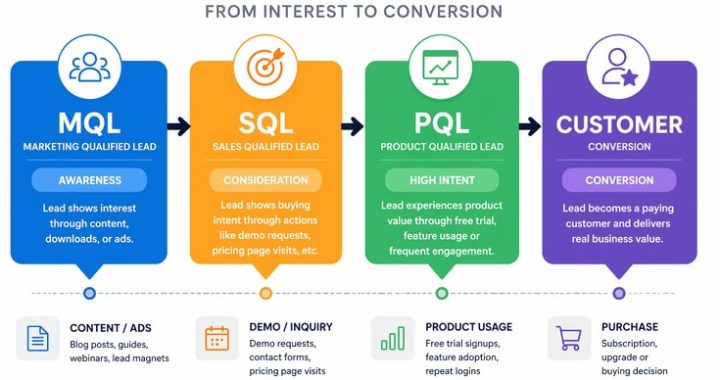
At its core, lead scoring is a system for ranking prospects based on how likely they are to convert. Each lead gets assigned points based on a combination of who they are (their job title, company size, industry) and what they do (pages visited, emails opened, forms filled out, demos requested). Add up the points, and you get a score that tells you where that lead sits in their buying journey.
It sounds simple, and conceptually it is. But the models behind it can range from a basic spreadsheet formula to a machine-learning system that recalculates scores in real time based on hundreds of behavioral signals. The right level of sophistication depends on your business, your sales cycle, and how much data you’re actually working with.
Why Speed Through the Funnel Matters So Much
Every day a qualified lead sits untouched is a day your competitor might reach them first. A scoring model doesn’t just organize your leads; it acts as an early-warning system that tells your sales team exactly when that window is open.
There’s also the matter of sales bandwidth. No sales team has unlimited hours to chase every contact form submission with equal urgency. Scoring gives reps a prioritized list, so their time goes toward the leads most likely to close rather than the ones that technically exist in the database but show no real buying signals.
The Building Blocks of an Effective Scoring Model
A scoring model generally rests on two categories of data, and mixing both is what separates a useful model from a shallow one.
Demographic and firmographic fit — this is about whether the lead matches your ideal customer profile in the first place. Signals here include:
Job title or seniority level
Company size or annual revenue
Industry or vertical
Geographic location
Budget indicators, where available
Behavioral engagement — this measures how actively a lead is interacting with your brand and how close that behavior suggests they are to a purchase decision. Signals here include:
Website visits to high-intent pages, such as pricing or case studies
Email opens, clicks, and reply rates
Content downloads, particularly bottom-of-funnel assets
Webinar or demo attendance
Frequency and recency of interactions

A lead who checks every demographic box but has never opened an email isn’t ready. A lead who’s binge-reading your blog but works at a company far outside your target market probably never will be. The scoring model’s job is to weigh both dimensions together so sales isn’t chasing false positives.
Common Lead Scoring Models Worth Considering
Not every business needs the same approach, and choosing the wrong model can create more noise than signal. Here are the main types agencies and in-house teams typically build from.
Points-based scoring: Predictive lead scoring: Uses machine learning to analyze historical conversion data and identify patterns human teams might miss. Instead of manually assigning point values, the model learns which combinations of traits and actions actually correlate with closed deals.
Grade and score hybrid: Combines a letter grade (A through D, based on fit) with a numeric score (based on engagement). This two-axis approach makes it easy to visualize leads on a matrix — a hot lead with poor fit is treated differently than a warm lead with excellent fit.
Negative scoring: Just as important as adding points is subtracting them. Actions like unsubscribing, visiting a careers page, or providing a personal email address instead of a work one can indicate a lead is disengaging or was never a serious prospect. Negative scoring keeps the model honest.
Building a Model That Actually Reflects Your Buyers
The businesses that get the most out of lead scoring are the ones willing to build the model around their own sales data rather than copying an industry standard.
A good starting process looks like this:
Pull historical data on closed-won and closed-lost deals. Look for patterns in the traits and behaviors that separated the two groups.
Interview your sales team. They often know, anecdotally, what a “hot” lead looks like before the data confirms it.
Assign preliminary point values based on those patterns, weighting behavioral signals that correlate most strongly with conversion.
Set a qualification threshold where marketing hands the lead to sales, along with a clear definition of what happens above and below that line.
Test, measure, and revise. No model is right on the first attempt — treat it as a living system, not a one-time project.
This last point deserves emphasis. Lead scoring isn’t a set-it-and-forget-it tool. Buyer behavior changes, product offerings evolve, and what counted asa strong signal last year might mean nothing today. Models that aren’t revisited quarterly tend to drift out of alignment with reality, quietly sending sales after the wrong leads for months before anyone notices the conversion rate dipping.
Aligning Marketing and Sales Around the Score
One of the quieter benefits of a well-built scoring model is that it forces a conversation that too manycompanies avoid: what actually counts as a qualified lead?
Without a shared definition, marketing tends to celebrate volume while sales complains about quality, and both sides end up frustrated with each other instead of focused on the prospect.
A scoring model, built collaboratively, becomes the shared language between the two teams. It defines, in numbers everyone agrees on, exactly when a lead is ready to be worked. That alignment alone tends to shrink the friction that slows deals down in the middle of the funnel — the stage where good leads often stall simply because no one was clear on whose job it was to follow up.
Automating the Handoff
The real value comes from connecting your scoring model to automated workflows:
Instant sales notifications when a lead crosses the qualification threshold
Automated routing to the right rep based on territory or account ownership
Triggered nurture sequences for leads that fall just below the threshold
Re-engagement campaigns for leads whose scores are trending downward
This is where marketing automation platforms earn their keep.
Measuring Whether the Model Is Working
A scoring model’s success shouldn’t be judged by how sophisticated it looks on paper — it should be judged by outcomes. Watch for:
Shorter average time from marketing-qualified lead to closed deal
Higher conversion rates among leads that cross the qualification threshold
Fewer complaints from sales about lead quality
A shrinking gap between marketing’s definition of “qualified” and sales’ definition
If these numbers aren’t improving, the model needs revisiting — not abandoning. Often the fix is as simple as reweighting a handful of behaviors or tightening the qualification threshold rather than starting over.
Bringing It All Together
Lead scoring isn’t about replacing human judgment with a formula. It’s about giving your team a faster, clearer way to see what’s already happening in the data — who’s engaging, who’s ready, and who needs more time. When the model reflects your actual buyers rather than generic assumptions, it becomes one of the most reliable ways to shorten the funnel without cutting corners on the relationship-building that turns prospects into customers.
For agencies managing multiple client accounts, building tailored scoring models isn’t just a nice-to-have — it’s often the difference between a client’s sales team trusting marketing’s leads and quietly working around them. Get the model right, and the entire funnel starts moving at the speed your best prospects deserve.