Email Nurture Sequences That Convert Without Being Spammy
Most people don’t buy the first time they hear about you. This is exactly where email nurture sequences earn their keep. Done right, they build trust one message at a time and guide a cold lead toward a confident “yes.” Done wrong, they feel like a stranger shouting “BUY NOW” into your inbox every other day until you unsubscribe out of self-defense.
The difference between the two isn’t luck. It’s strategy. In this post, we’ll break down what actually makes a nurture sequence convert, why so many sequences feel spammy, and how to build one that respects your subscribers while still moving them toward a purchase.
What Is an Email Nurture Sequence, Really?
An email nurture sequence is a series of automated emails sent to a subscriber over days or weeks, designed to build a relationship before asking for a sale. Think of it as a conversation, not a pitch. A new subscriber doesn’t know your brand’s story, hasn’t seen proof that you deliver results, and definitely isn’t ready to hand over their credit card in email number one.
Nurture sequences exist to close that gap gradually — through value, relevance, and timing. When they’re done well, subscribers barely notice they’re being “marketed to.” They just feel like they’re getting genuinely useful content from a brand that understands them.
Why So Many Nurture Sequences Feel Spammy
Before we talk about what works, it helps to understand what pushes a sequence into spam territory. Most brands don’t set out to annoy their audience — they just fall into a few common traps.
Selling too early. If your very first email after opt-in is a hard pitch, you haven’t earned the right to ask yet.
Generic, one-size-fits-all messaging. Sending the same sequence to every subscriber regardless of how they found you or what they’re interested in feels impersonal fast.
Too much frequency, too little value. Daily emails with nothing new to say train subscribers to tune you out or hit unsubscribe.
All talk, no listening. Sequences that never reference subscriber behavior (opens, clicks, purchases) miss obvious cues about what someone actually wants.
Fake urgency. “Only 2 hours left!” on a discount that resets every week erodes trust the moment someone notices.
Walls of self-promotion. Endless “here’s why we’re the best” messaging without any real substance reads as noise, not value.
None of these mistakes are about frequency alone — they’re about relevance. A subscriber who feels understood will happily open five emails a week. A subscriber who feels sold to will resent even one.
The Foundation: Value Before Ask
The single biggest shift that separates a converting sequence from a spammy one is sequencing value before requests. Every email should answer an unspoken question in the reader’s mind: “What’s in this for me?” If the honest answer is “nothing, this is just a sales pitch,” the email needs a rework.
A useful mental model is the 80/20 approach — roughly 80% of your sequence should educate, entertain, or solve a small problem, while the remaining 20% makes a clear, confident ask. This doesn’t mean padding your emails with fluff; it means making sure the value is real and specific to the reader’s situation.
Building the Sequence: A Practical Structure
While every business and audience is different, most high-converting nurture sequences follow a similar emotional arc. Here’s a structure you can adapt:
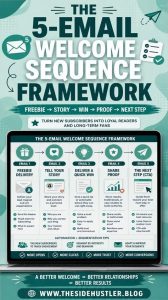
1. The Welcome Email
This sets expectations. Thank the subscriber, tell them what to expect (how often you’ll email, what kind of content), and deliver on whatever promise got them to opt in — the lead magnet, the discount code, the guide.
2. The Story Email
People connect with people, not logos. Share the story behind your business, a founder’s journey, or a customer transformation. This is where trust starts to form, because it shows there’s a real philosophy behind what you sell.
3. The Value/Education Email
Teach something genuinely useful related to the problem your product solves. This email should stand on its own — useful even if the reader never buys anything.
4. The Social Proof Email
Case studies, testimonials, or results are far more persuasive than claims about your own greatness. Let someone else do the bragging for you.
5. The Objection-Handling Email
Every audience has hesitations — price, time, trust, complexity. Address the most common objection directly and honestly, rather than hoping it never comes up.
6. The Soft Offer Email
Now that trust has been built, introduce your product or service — but frame it as a natural next step, not a hard sell. Focus on the transformation, not just the features.
7. The Direct Offer / Urgency Email
This is where a clear call to action belongs, ideally with a genuine reason to act now (limited spots, a real deadline, bonus expiring). Urgency only works when it’s true.
Not every sequence needs all seven emails, and the order can flex depending on your funnel. What matters is that each email earns the right to the next one by delivering something real first.
Personalization Is What Makes It Feel Human
Generic blasts are the fastest way to feel spammy, even if the content itself is good. Personalization doesn’t require a complex tech stack — small, thoughtful touches go a long way:
Segment by how someone joined your list (webinar attendee vs. blog subscriber vs. free-trial user) and tailor the first few emails accordingly.
Use behavioral triggers — if someone clicks a link about a specific service, follow up with more detail on that exact topic, not a generic recap.
Reference where someone is in their journey. A brand-new subscriber and someone who abandoned checkout should never get the same email.
The goal is for each subscriber to feel like the sequence was built with their specific situation in mind — because in a well-segmented system, it effectively was.
Timing and Cadence: Less Can Be More
There’s no universal “perfect” number of emails or days between sends, but a few principles hold up across industries:
Space emails closer together early in the sequence (every 1–3 days) while interest is fresh, then widen the gaps as the sequence progresses.
Watch engagement, not just your calendar. If open rates drop sharply, that’s a signal to slow down, change the angle, or re-segment.
Give subscribers an easy way to self-select into more relevant content — a simple “what are you most interested in?” click early on can reshape the rest of the journey.
Always make unsubscribing easy and drama-free. Counterintuitively, a clean opt-out process protects your sender reputation and keeps your list full of people who actually want to be there.
Writing Style: The Human Factor
Even a well-structured sequence can feel spammy if the writing itself sounds robotic or overly promotional. A few habits help keep emails feeling human:
Write the way you’d talk to a smart colleague — clear, warm, and specific, not stiff or salesy.
Lead with a real insight or story in the subject line and opening line, not a generic “Don’t miss out!” hook.
Keep paragraphs short. Big blocks of text feel like work to read, especially on mobile.
Ask questions and invite replies. A sequence that feels like a two-way conversation, rather than a broadcast, builds far more trust.
Edit out anything that only exists to hype your product. If a sentence doesn’t inform, entertain, or build trust, cut it.
Measuring What Actually Matters
Open rates and click-through rates are useful, but they’re not the full picture. To know whether a nurture sequence is actually working, track:
Conversion rate at the end of the sequence, not just per email.
Unsubscribe and spam-complaint rates, which tell you if something feels off even when opens look healthy.
Reply rates, a strong signal of genuine engagement and trust.
Revenue per subscriber across the full sequence, since the sale might happen on email four, not email seven.
Reviewing these metrics regularly lets you refine the sequence over time — cutting what isn’t working and doubling down on the moments that clearly build trust or drive action.
The Bottom Line
A nurture sequence stops feeling spammy the moment it stops feeling like a sequence at all — and starts feeling like a relationship. That means leading with real value, personalizing based on actual behavior, respecting your subscribers’ time, and only asking for the sale once you’ve genuinely earned it.
Get that balance right, and your emails won’t just avoid the spam folder mentality — they’ll become something your audience actually looks forward to opening. And that’s ultimately what converts: not pressure, but trust.