
Common Social Media Mistakes to Avoid
Social media has become one of the most powerful tools for businesses, brands, and creators. It helps you connect with people, build trust, share your message, and grow your audience without needing a huge budget. But many businesses still fail to get results because they make simple mistakes that reduce reach, weaken engagement, and confuse their audience.
The truth is, social media success is not only about posting regularly. It is about posting with purpose, understanding your audience, and creating content that feels real and valuable. Many brands jump into social media with excitement, but after a few weeks, they either stop posting, use the wrong strategy, or focus too much on selling. These mistakes can hurt growth more than most people realize.
If you want your social media presence to actually work for your business, you need to avoid the common errors that many brands repeat again and again. In this article, we will look at the biggest social media mistakes to avoid and how to fix them in a simple, practical way.
1. Posting Without a Clear Strategy
One of the biggest mistakes businesses make is posting without a plan. They share random content, hope something performs well, and then wonder why the page is not growing. Social media without strategy is like driving without a map. You may move, but you may not reach the right place.
A clear strategy helps you decide what to post, who you are posting for, and what result you want. Do you want more brand awareness, website traffic, leads, or sales? Each goal needs different content. For example, if your goal is awareness, educational and entertaining posts may work best. If your goal is leads, you may need more targeted posts with strong calls to action.
Without strategy, your content becomes inconsistent. One day you post a product photo, the next day a quote, then nothing for a week. This confuses your audience and weakens your brand identity. A simple content plan can solve this problem and make your social media efforts much more effective.
2. Ignoring Your Audience
Another common mistake is creating content based on what the business wants to say instead of what the audience wants to hear. Many brands talk too much about themselves, their services, and their achievements, but they forget to answer the real question in the customer’s mind: “What’s in it for me?”
To grow on social media, you need to understand your audience deeply. What problems do they face? What type of content do they enjoy? What language do they use? What kind of posts make them stop scrolling? When you know these things, you can create content that feels relevant and useful.
Ignoring your audience often leads to low engagement because people do not connect with content that feels generic or too promotional. A humanized brand speaks to people, not at them. It listens first, then responds with content that solves problems, inspires trust, or entertains.
3. Being Too Promotional
Many businesses treat social media like a sales board. Every post says “buy now,” “book now,” or “contact us today.” While selling is important, constant promotion can push people away. People go to social media to learn, laugh, connect, and be inspired, not to be sold to all the time.
If every post is a sales pitch, your audience may stop paying attention. They may even unfollow your page. A better approach is to use the 80/20 rule: most of your content should provide value, and only a smaller part should directly promote your product or service.
You can share tips, case studies, behind-the-scenes content, customer stories, industry insights, and helpful guides. When people trust your brand, they become more open to your offers. Social media works best when it feels helpful instead of pushy.
4. Posting Inconsistently
Inconsistency is one of the fastest ways to lose momentum on social media. Some brands post daily for one week, then disappear for a month. Others post only when they remember. This irregular activity makes it hard to build an audience because people do not know when to expect content from you.
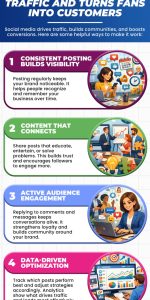
Social media platforms also reward consistency. When you post regularly, you give your content more chances to be seen, shared, and engaged with. A consistent posting schedule helps you stay visible and keeps your brand fresh in people’s minds.
This does not mean you need to post all day, every day. It means you should choose a schedule that you can maintain. Even three quality posts per week is better than random posting. Consistency builds trust, and trust builds growth.
5. Using the Same Content Everywhere
Many businesses make the mistake of copying the exact same content across all social media platforms without adjusting it for each audience. While it may save time, it often reduces impact. Every platform has its own style, user behavior, and content preference.
For example, content that performs well on Instagram may not work the same way on LinkedIn. A casual reel may be perfect for one audience, while a professional post may be more suitable for another. If you use the same post everywhere without changes, it may feel out of place.
The better approach is to repurpose content intelligently. Keep the core message the same, but adjust the format and tone for each platform. This makes your content feel more natural and more relevant to the people using that platform.
6. Not Paying Attention to Analytics
Many businesses post content but never check whether it is actually working. They may look at likes and assume everything is fine, but likes alone do not tell the full story. Social media analytics show you what your audience really responds to.
You should look at metrics like reach, impressions, engagement rate, clicks, shares, saves, and conversions. These numbers help you understand what type of content performs best and what needs improvement. For example, if educational posts get more saves, that tells you people find them useful. If video posts get more reach, that tells you your audience prefers video.
Without analytics, you are guessing. With analytics, you are making informed decisions. Even a simple monthly review can help you improve your content and grow faster over time.
7. Ignoring Visual Quality
Social media is a visual space. If your graphics, photos, and videos look weak or unprofessional, people may scroll past your content without noticing it. Poor design, blurry images, cluttered layouts, and inconsistent branding can hurt credibility.
You do not need expensive production to look good. What matters most is clarity, consistency, and basic quality. Use clean visuals, readable text, and simple branding elements such as colors and fonts. Make sure your posts look intentional, not rushed.
Strong visuals help your content stand out in crowded feeds. They also create a better first impression. Since people often judge content in seconds, visual quality can make a big difference in whether someone stops to read your post or keeps scrolling.
8. Not Engaging With Followers
Social media is not a one-way street. Many businesses post content but never respond to comments, messages, or mentions. This makes the brand feel distant and unapproachable. People want to feel seen and heard, especially when they take time to interact with your content.
Engagement is not just about posting; it is about building relationships. Reply to comments, answer questions, thank people for sharing your content, and join conversations when relevant. These small actions make your brand more human and more trustworthy.
If you ignore your audience, they may feel ignored too. But if you engage with them regularly, you build loyalty and connection. This can lead to better word-of-mouth, stronger community, and more repeat customers.
9. Following Every Trend Without Thinking
Trends can help your content get attention, but blindly chasing every trend is a mistake. Not every trend fits your brand, your audience, or your goals. If you jump on every viral topic just because it is popular, your content may lose focus and feel random.
The best use of trends is selective and strategic. Ask yourself whether a trend matches your brand voice and whether your audience will actually care. A trend should support your message, not replace it.
When used wisely, trends can make your content more visible and relatable. But when used carelessly, they can make your brand look disconnected or desperate for attention. The goal is not to follow everything, but to choose what makes sense for your business.
10. Not Having a Real Brand Voice
A lot of social media pages sound robotic. They use generic phrases, copied captions, and bland messages that could belong to any business. This is a mistake because people connect with personality, not just information.
Your brand voice is the way your business sounds online. It can be friendly, expert, bold, helpful, casual, or professional depending on your audience. What matters is that it feels consistent and authentic.
When your brand voice is clear, people remember you more easily. They also feel a stronger connection to your content. A humanized voice makes your social media more relatable and less mechanical.
11. Forgetting the Customer Journey
Not every follower is ready to buy immediately. Some people are just discovering your brand, some are comparing options, and some are ready to take action. A common mistake is creating content only for the final sale stage and ignoring the rest of the journey.
Your social media content should guide people step by step. Educational posts can attract new followers. Trust-building content can help them learn more about your brand. Testimonials and service explanations can move them closer to making a decision.
When you understand the customer journey, your content becomes more effective. You stop pushing the same message to everyone and start creating content that matches their stage of interest. That makes your social media feel more helpful and natural.
Conclusion
Social media can be a powerful growth tool, but only when it is used thoughtfully. Many businesses struggle not because social media does not work, but because they make avoidable mistakes. Posting without strategy, ignoring the audience, being too promotional, and failing to stay consistent can all limit results.
The good news is that these mistakes are fixable. Once you focus on value, consistency, engagement, and authenticity, your social media presence becomes much stronger. Instead of just posting content, you begin building real connections with people.
In the end, successful social media is not about being perfect. It is about being clear, useful, and human. If you avoid these common mistakes and create content with intention, your brand will have a much better chance of standing out and growing online.