
How Citations and Local Backlinks Boost Rankings (And Where to Get Them)
If you run a local business, you’ve probably heard “get more backlinks” so many times it’s started to feel like white noise. But here’s the part most people skip over: not all backlinks are created equal, and for local businesses, there’s an entire category of links and mentions that matters just as much — sometimes more.
If your business shows up on page one for “plumber near me” or “best bakery in [your city],” there’s a good chance citations and local links are part of the reason why. Let’s break down what they actually are, why Google cares about them, and exactly where you can go to start building them for your own business.
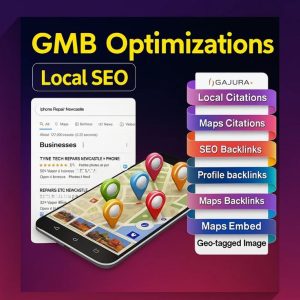
What Exactly Is a Citation?
It doesn’t have to include a link back to your website. Sometimes it’s just your business listed in a directory, a review site, or even a local news article that mentions your company in passing.
Think of citations as digital breadcrumbs. Every time your business is mentioned consistently across the web, it sends a signal to search engines that says, “this business is real, it’s established, and it operates where it claims to operate.” Google cross-references these mentions to verify legitimacy, and the more consistent and widespread they are, the more trust your business earns.
There are two main types of citations:
Structured citations — These appear on business directories and listing sites where your NAP is displayed in a defined format, like Yelp, Google Business Profile, or the Yellow Pages.
Unstructured citations — These show up more organically, like a blog post mentioning your restaurant’s name and location, or a local news story referencing your shop.
Both matter, but structured citations are usually easier to build intentionally, which is why most local SEO strategies start there.
Why Citations Actually Move the Needle
It’s easy to dismiss citations as busywork, especially when you can’t always draw a straight line between “I listed my business on a directory” and “my rankings improved.” But the impact is cumulative rather than immediate, and it works on a few levels.
First, citations build trust signals. Search engines want to serve accurate, reliable results, especially for “near me” searches where users expect instant, correct information. A business with consistent NAP data across dozens of reputable sites looks far more credible than one with scattered or conflicting information.
Second, citations improve local pack visibility. The local three-pack — that cluster of map results that shows up above organic listings — relies heavily on proximity, relevance, and prominence. Citations feed directly into that prominence factor. The more places your business is verified and mentioned, the more “present” you appear in your local market.
Third, and this is the one people underestimate, inconsistent citations can actively hurt you. If your address is listed one way on Google and slightly differently on Yelp or Facebook, that discrepancy creates confusion for both users and search algorithms. Cleaning up and standardizing your citations is often one of the fastest wins in a local SEO audit.
What Are Local Backlinks, and How Are They Different?
While citations are about mentions, backlinks are about actual hyperlinks pointing back to your website from another site.
Local backlinks carry extra weight for local SEO because they combine two powerful signals at once: authority (a link from a trusted third-party site) and geographic relevance (a signal that ties your business to a specific place). A backlink from a national industry publication is valuable, sure, but a backlink from your city’s local newspaper or a well-known community blog tells search engines something a generic link can’t: that you’re a recognized part of that specific community.

Where to Get Citations
Building citations doesn’t need to be complicated, but it does need to be deliberate. Here’s where to start:
Google Business Profile — This is non-negotiable. It’s the single most influential citation you can have, and it directly powers your appearance in Google Maps and the local pack.
Bing Places for Business — Often overlooked, but still relevant, especially since Bing powers some voice search results and a meaningful slice of desktop search traffic.
Apple Maps Connect — Increasingly important as more users rely on Siri and Apple Maps for local search.
Getting listed here can cascade your citation to dozens of other platforms automatically.
Industry-specific directories — A law firm might list on Avvo or FindLaw, a contractor might use Angi or HomeAdvisor, and a restaurant might show up on OpenTable or Zomato. These niche citations carry extra relevance because they signal industry context along with location.
General business directories — Yelp, Yellow Pages, Better Business Bureau, and Manta are all solid starting points that most businesses should have covered.
Local chamber of commerce and business association websites — These are often underused, but they’re a great source of both citations and local backlinks in one move, and they usually carry real community trust.
The key with citations isn’t quantity for its own sake. It’s consistency. Your business name, address, and phone number should match exactly, down to how you format your suite number or abbreviate “Street” versus “St.” Small inconsistencies add up.
Where to Get Local Backlinks
Local backlinks generally take a bit more effort than citations because they usually require some kind of relationship, contribution, or newsworthy angle. That said, they’re absolutely within reach for most local businesses.A few reliable approaches:
Sponsor a local event or team — Sponsoring a youth sports league, a charity 5K, ora community festival often earns you a link on the event’s website, which tends to carry strong local relevance.
Partner with other local businesses — Cross-promotion, joint offers, or simple “recommended local businesses” pages are a natural way to earn links from businesses that already share your customer base.
Get involved with local journalism — Local newspapers and news sites are frequently looking for expert quotes or story angles. Offering yourself as a source for a relevant story can earn a high-authority local link.
Join local business associations and chambers of commerce — Beyond the citation benefit mentioned earlier, many of these organizations link out to member businesses from their directory or news pages.
Sponsor or speak at local meetups and conferences — Even smaller industry or community events often list sponsors and speakers with links back to their websites.
Create genuinely useful local content — A “best hiking trails near [city]” guide, a local resource roundup, or a neighborhood guide can attract organic links from local bloggers, tourism boards, or community pages that want to reference something helpful.
Reach out to local bloggers and influencers — A well-written email pitching a collaboration, a product review, or a guest feature can open doors, especially with micro-influencers who cover your specific city or niche.
A Few Best Practices Worth Keeping in Mind
Building citations and backlinks isn’t a one-and-done task, and chasing volume over quality tends to backfire. A handful of principles will keep your efforts on track:
Audit your existing citations first. Before adding new ones, search your business name and check for outdated or conflicting information on existing listings.
Prioritize relevance over reach. A link from a small, well-regarded local blog often does more for your rankings than a link from a massive but irrelevant national site.
Avoid shortcuts like paid link farms or citation spam services. These can trigger penalties and rarely hold up over time.
Keep your NAP information in one master document so every listing you create or update pulls from the exact same source.
Be patient. Citation and backlink building is a long-game strategy. The compounding effect tends to show up over months, not days.

Bringing It All Together
Citations and local backlinks won’t single-handedly rocket your business to the top of search results, but they’re a foundational piece of any serious local SEO strategy. They build the kind of trust and geographic relevance that search engines are specifically designed to reward, and unlike some ranking factors, they’re largely within your control.
Start with the basics — a fully optimized Google Business Profile, clean and consistent citations across major directories, and a couple of genuine local relationships that can turn into backlinks. From there, keep building steadily. Over time, those small, consistent signals add up to real, measurable movement in your local search visibility.
If managing all of this feels like a lot to juggle alongside running your business, that’s exactly the kind of work a marketing agency can take off your plate — auditing your existing citations, cleaning up inconsistencies, and building out a genuine local backlink profile that actually moves your rankings.